It Started With a Rainy Weekend
Something shifted for me this weekend. It was raining on the Coast, one of those slow, grey afternoons where you just stop trying to be productive. Instead of a big grocery run, I walked to the little artisan grocer near us and bought three things. Good prosciutto. A couple of figs. And a piece of blue cheese I had been meaning to try for months.
That was it. Three things on a board.
We ate slowly. No phones. No rush. I spent about ten minutes on that blue cheese alone, and honestly, it was one of the best things I have eaten in a long time. Not because it was fancy. Because I was actually paying attention.
This is what intentional entertaining looks like when you strip away everything you think it is supposed to be. No Pinterest spread. No two hours of prep. No stress about whether you have enough. Just a few things, chosen well, and the time to actually taste them.
The Myth of More
Somewhere along the way, we started believing that a good night in needs a full production. A cheese board with fourteen items. A playlist queued up. Candles at the right height. Cloth napkins that match the runner. And if you are hosting, triple all of that and add the anxiety of wondering whether your guests will think you tried hard enough.
Here is the thing nobody says out loud: those overloaded boards are exhausting. They take forever to assemble, half the food does not get eaten, and you spend the first twenty minutes of the night in the kitchen instead of at the table. The board becomes a performance instead of a meal. And the irony is that most people cannot even taste what is on it because there is too much competing for attention.
The gatherings that actually stay with you, the ones people bring up months later, almost never involve twelve types of cheese. They involve one really good conversation and food that gave everyone a reason to slow down.
This is the same principle we keep coming back to in the studio. Fewer pieces, more intention. One board made with real care is worth more than a shelf full of things that do not mean anything. The ritual is not about how much is on the table. It is about how present you are at it.
Three Things, Chosen Well: A Framework for Intentional Entertaining
If the idea of "less but better" sounds nice in theory but vague in practice, here is how it actually works. This is the framework I have been using for months now, and it has changed the way I think about feeding people.
Pick one from each category:
1. Something savoury and cured. Prosciutto from a deli that slices it fresh. Soppressata with visible fennel seeds. A good salami that smells like someone's Italian grandmother made it. You want one cured meat, and you want it to be the best version of itself you can find. A single pile of beautifully draped prosciutto on a Large Resin Paddle Board looks generous without being excessive.
2. Something creamy or sharp. One cheese. Not three, not five. One. Pick it based on your mood: a triple cream brie if you want something indulgent, a punchy blue if you want something that demands attention, or an aged cheddar if you want something that pairs with literally everything. Ask the person behind the counter at your local deli what they have been eating this week. That question alone will get you something worth slowing down for.
3. Something fresh or sweet to contrast. Seasonal fruit is your friend here. Right now, figs are perfect, they are soft, sweet, and beautiful when split open. In winter, try sliced pear with a drizzle of honey. In summer, stone fruit or fresh grapes. This is your palate reset between bites. It turns three items into a complete experience.
That is the whole formula. One savoury, one dairy, one fresh. Lay them out on a board with a knife and a linen napkin, and you have something that looks and tastes considered without requiring a trip to three different shops.
How to Build a Board Worth Slowing Down For
The physical assembly matters more than you think. Not because it needs to be styled, but because how you lay things out signals to everyone around you: we are not rushing this.
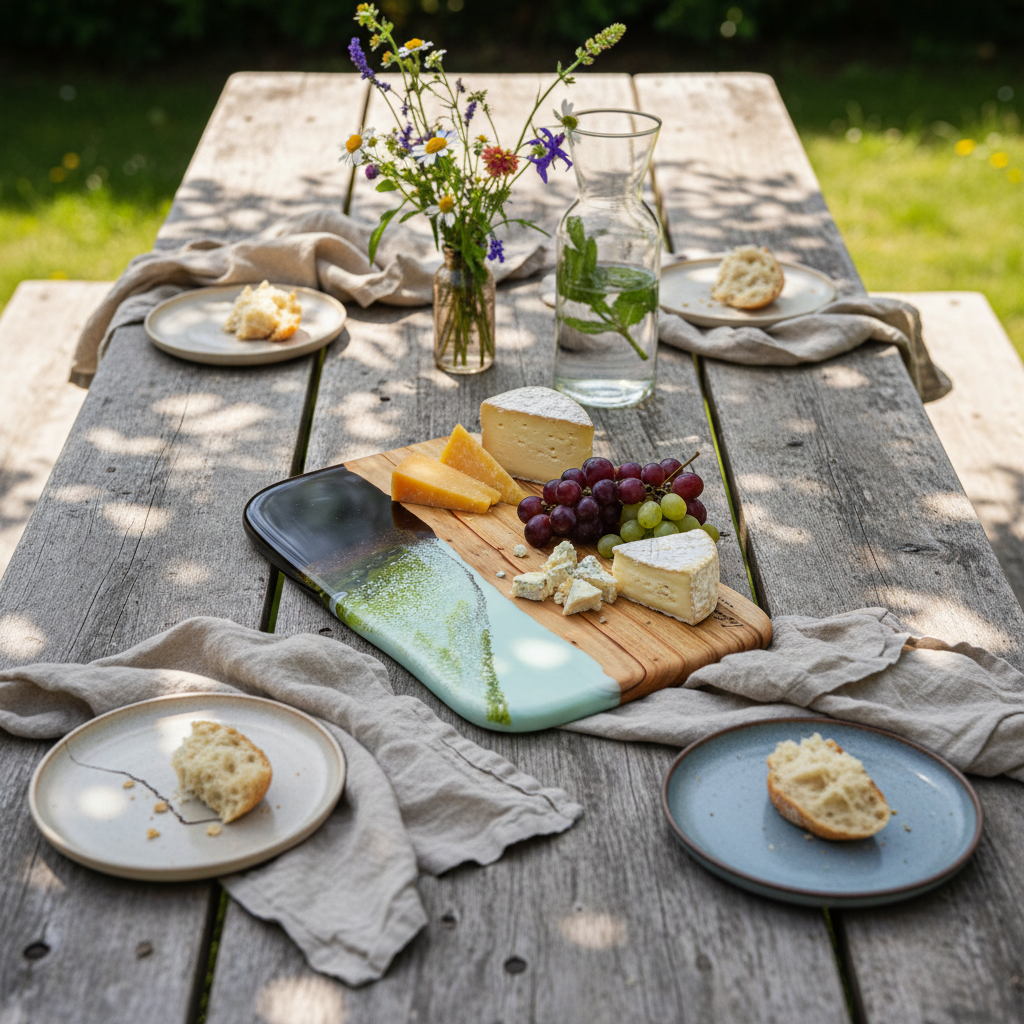
Start with the board itself. Something with weight and texture that feels good to touch. The timber grain, the warmth of the wood under your hand, the way a Round Resin Paddle Board catches the light from the resin edge. These details register even when people cannot name them. They make the whole moment feel more real.
Place your cheese first. Off-centre, slightly toward one end. If it is soft, leave it whole and let people cut into it themselves. That first slice is part of the ritual. If it is hard, pre-cut a few pieces and leave the rest as a wedge. People will follow your lead.
Drape, do not stack, the cured meat. Fold it loosely, like fabric. It should look like it landed there, not like it was arranged by someone watching a tutorial. Pile it next to the cheese, not opposite. You want people reaching for both in the same motion.
Scatter the fruit. Split figs in half. Tear grapes into small clusters of three or four. Drop them into the gaps. One piece slightly off the edge of the board. Nothing lined up.
Add one condiment, maximum. A small dish of honey. A handful of marcona almonds. A spoonful of fig jam. Not all three. The restraint is the whole point. One accent flavour gives everyone something to discover. Three accent flavours just creates noise.
Leave empty space. This is the hardest part and the most important. The timber surface of your board is part of the presentation. Let the grain show through. The empty space is what makes three items look intentional instead of sparse. If you are using one of our Resin Cheese Knives, lay it across the board at an angle. Functional and beautiful at the same time.
The Night That Stays
I think the reason that rainy afternoon stuck with me is not really about the food. It is about what happened when the food was simple enough to disappear into the background. We talked for two hours. Nobody checked the time. Nobody got up to "get more things" from the kitchen. The board was small enough that we finished it, which meant we were not grazing mindlessly. We were tasting.
That is what intentional entertaining actually gives you. Not a less impressive table. A more present one.
If you are someone who puts pressure on yourself to create a spread, try this instead. Next Friday night. Three things from a good grocer. One board. No plan beyond sitting down. See what happens when you stop trying to impress and start trying to connect.
And if you want a board that feels like it belongs in that kind of moment, something handcrafted and honest, with character that comes from real timber and real hands, our Nibbles Gift Box is a beautiful place to start. It is designed for exactly this. A few things, chosen well. Time to actually taste them.

Frequently Asked Questions
How many items should you put on a cheese board for two people?
Three to five items is the sweet spot for two people. One cheese, one cured meat, and one piece of fresh fruit creates a complete experience without waste. Add a small dish of honey or a handful of nuts if you want a fourth element, but resist the urge to keep adding. A board for two should be finished, not leftover.
What is the best cheese to serve if you are only picking one?
Ask your local deli what is at its peak right now. If you want a safe starting point, a good triple cream brie is hard to go wrong with because it is crowd-pleasing and pairs with both fruit and cured meat. If you want something more adventurous, a blue cheese like Roquefort or a local Gippsland Blue will give you something to actually talk about at the table.
How long should cheese sit out before serving on a board?
At least 30 minutes at room temperature, ideally closer to 45. Cold cheese has muted flavour and a firm texture that makes it harder to taste properly. Take it out of the fridge before you do anything else, and by the time you have laid out the board, it will be ready. Soft cheeses like brie benefit the most from this.
What is the difference between a grazing board and an intentional cheese board?
A grazing board is designed for volume. It fills every inch of surface with as many items as possible, and people pick at it over hours. An intentional board is the opposite. It features a few carefully chosen items with space between them, designed to be eaten together in one sitting. The goal is not abundance. It is attention.
Can you use a resin board for serving food?
Yes, with one important note. On our boards, all food should be placed on the timber portion, not the resin. The Camphor Laurel timber is naturally antibacterial and food safe. The resin edge is decorative and creates the distinctive look of each board, but it is not designed for direct food contact. This is actually one of the things that makes the boards so versatile, because the resin stays pristine while the timber develops character over time.
What fruits pair best with cheese and charcuterie?
Match the season. In autumn, figs and pears are ideal because their sweetness contrasts beautifully with salty cured meats and sharp cheeses. In summer, go for stone fruit like nectarines or fresh cherries. In winter, sliced apple with a drizzle of honey works well. Grapes are a reliable year-round option. The key is to pick one or two fruits, not five. You want a clean contrast, not a fruit salad.
How do you make a simple cheese board look impressive?
Use a board with character, something handmade with visible grain and texture, rather than a plain flat surface. Place your cheese off-centre and leave empty space on the board so the timber shows through. Fold your cured meat loosely instead of laying it flat. Split your figs or fruit to show the inside. One well-placed knife completes the look. The secret is restraint. Three beautiful things with breathing room between them will always look more considered than fifteen things crammed together.
Share:
Hosting with Intention
Why We'll Never Automate the Things That Matter