January feels different.
After the rush of Christmas, the sales, the noise, and the excess, something shifts. People begin to crave clarity. Less clutter. Fewer purchases. Better choices.
This is not a season of impulse buying. It is a season of intention.
At The Fifth Design, January is when we return to what matters most: craftsmanship, meaning, and creating pieces that earn their place in a home. If you are feeling drawn toward more thoughtful living and gifting this year, you are not alone.
This guide explores what intentional gifting really means, why "filler gifts" are forgotten, and how to choose pieces that are made to be used, loved, and kept.
After the rush of Christmas, the sales, the noise, and the excess, something shifts.
What is intentional gifting?
Intentional gifting is the practice of choosing a gift based on meaning, relevance, and longevity rather than price, trends, or obligation.
An intentional gift:
- Reflects the recipient's life, style, or values
- Has a clear purpose or daily use
- Is chosen thoughtfully, not rushed
- Feels personal, even before customisation
It is not about spending more. It is about choosing better.
When a gift is intentional, it does not disappear into a drawer. It becomes part of a person's home and routine.
Why do so many gifts get forgotten?
Most gifts are forgotten for one simple reason: they were chosen to fulfil an obligation, not a moment.
Common reasons gifts lose meaning:
- They are generic or mass-produced
- They lack emotional relevance
- They are trend-driven rather than timeless
- They serve no real purpose in daily life
These "filler gifts" solve the problem of having something to give, but they do not create connection. They become clutter.
Thoughtful gifts, on the other hand, are remembered because they carry intention. They show that the giver truly saw the recipient.
Why is January the perfect time for intentional living?
January is a natural reset.
After a month of consumption, people begin to:
- Declutter their homes
- Reassess what they actually use
- Seek simplicity and meaning
- Invest more consciously
This makes January the ideal time to shift from "more" to "better."
Instead of chasing the next purchase, this is the moment to ask:
- What do I want to keep in my home?
- What objects actually serve me?
- What is worth investing in long-term?
Intentional living is not about minimalism for its own sake. It is about creating a space that reflects who you are and what you value.
What makes a gift meaningful?
A meaningful gift does three things:
1. It is accurate
It fits the person. Their lifestyle. Their taste. Their rituals.
A great gift says: "I see you."
Not: "I needed something to give."
2. It is useful
Objects that are used regularly become part of daily life. They are not just decorative. They serve a purpose.
When a gift becomes part of breakfast, lunch, and dinner, it carries ongoing emotional value.
3. It is made to last
Quality materials, skilled craftsmanship, and thoughtful design ensure that a gift does not date quickly or wear out.
Longevity is what transforms a gift into a keepsake.
Why do handcrafted gifts feel more personal?
Handcrafted pieces carry the imprint of the maker.
Unlike mass-produced items, handmade work:
- Shows variation, character, and uniqueness
- Reflects time, care, and human skill
- Cannot be replicated exactly
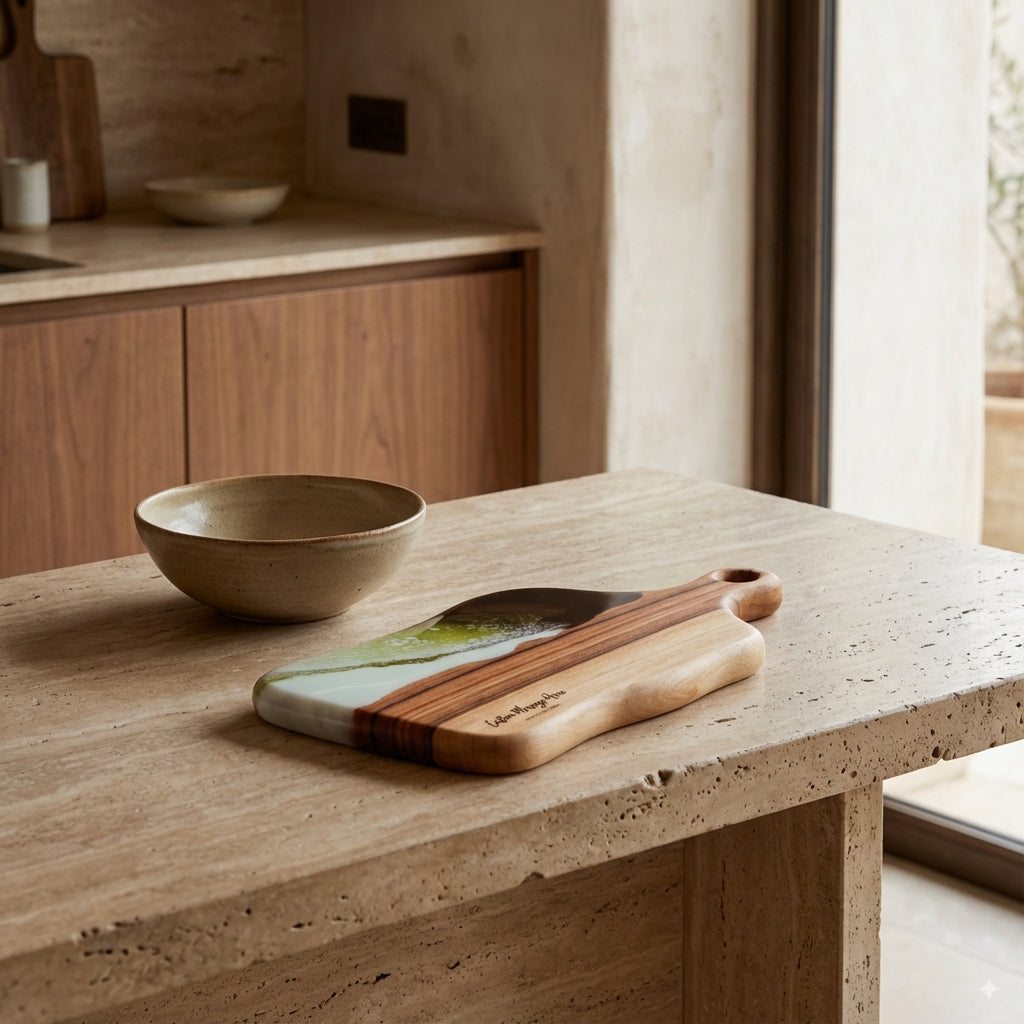
At The Fifth Design, each board is poured, finished, and refined by hand. The camphor laurel grain is always different. Every resin pour is one of a kind. No two pieces ever leave our studio the same.
That uniqueness creates an emotional connection. The gift does not feel replaceable.

What should you look for in an intentional gift?
When choosing a meaningful piece, ask:
- Will this be used or displayed regularly?
- Does this reflect the recipient's home and lifestyle?
- Is it made with quality materials?
- Does it have a story or craft behind it?
- Will it still feel relevant in five years?
Intentional gifting is not about perfection. It is about alignment.
Are practical gifts better than decorative ones?
Not always, but practical gifts often create deeper emotional value over time.
Decorative pieces can be beautiful, but functional objects:
- Integrate into daily rituals
- Create repeated moments of appreciation
- Become part of a person's lived experience
For example, a handcrafted board that is used for meals, gatherings, and everyday cooking becomes far more meaningful than an object that simply sits on a shelf.
When art and function exist in the same piece, the emotional return is multiplied.
What is the role of design in intentional living?
Design shapes how we interact with objects.
Thoughtful design:
- Reduces friction
- Encourages regular use
- Creates visual calm
- Adds beauty without excess
Our boards are designed with this philosophy. One side is practical for everyday chopping. The resin side is crafted as an art surface that can be displayed when not in use.
Function on one side. Art on the other.
This balance allows one object to serve both purpose and beauty without adding clutter.
Is intentional gifting about buying less?
Yes, but not about buying nothing.
Intentional gifting encourages:
- Fewer purchases
- Higher quality
- Greater emotional value
Instead of many small, forgettable gifts, it invites you to choose one meaningful piece.
This approach reduces waste, supports craftsmanship, and creates deeper connections.

How does sustainability relate to intentional gifting?
Sustainability is not only about materials. It is also about longevity.
Objects that are:
- Used daily
- Cared for
- Kept for years
- Repaired rather than replaced
have a far lower environmental impact than items that are quickly discarded.
Handmade, durable pieces contribute to a more conscious way of consuming. When you buy less and choose better, sustainability becomes a natural byproduct.
What makes a piece "worth keeping"?
A piece is worth keeping when:
- It still feels relevant over time
- It integrates seamlessly into your life
- It continues to bring beauty or usefulness
- It holds emotional significance
At its best, an object becomes part of your story.
It is not something you own. It is something you live with.
How can you apply this to your own home?
Start with one question: What do I reach for every day?
Those objects already reflect what you value.
From there:
- Remove what no longer serves you
- Choose replacements carefully
- Invest in pieces that bring both function and beauty
Intentional living is built one choice at a time.
Why choose The Fifth Design?
We create pieces for people who want fewer things, chosen well.
Our work is:
- Handcrafted in small batches
- Made from camphor laurel and resin, each piece unique
- Designed for daily use and long-term beauty
- Created to be gifted with meaning, not obligation
We do not make products to fill space. We make pieces that earn their place.
Final thoughts: Choosing what belongs
January is not about chasing the next purchase.
It is about asking: What deserves to stay in my life?
Whether you are choosing a gift for someone else or for yourself, intentional gifting is an act of care. It reflects attention, respect, and understanding.
You do not need more.
You need what belongs.
Made by us, kept by them
Every piece is handcrafted on the Sunshine Coast and engraved in-house at no extra cost, then sent in our gift box ready to give. Because the resin is hand poured, no two are ever the same.
Share:
The Real Estate Agent's Secret to Memorable Housewarming Gifts (And Why $150 Makes All the Difference)
The Mother's Day Gift She Actually Wants (And How to Get It Right)